The report names the carriage, not "somewhere on the 08:14"
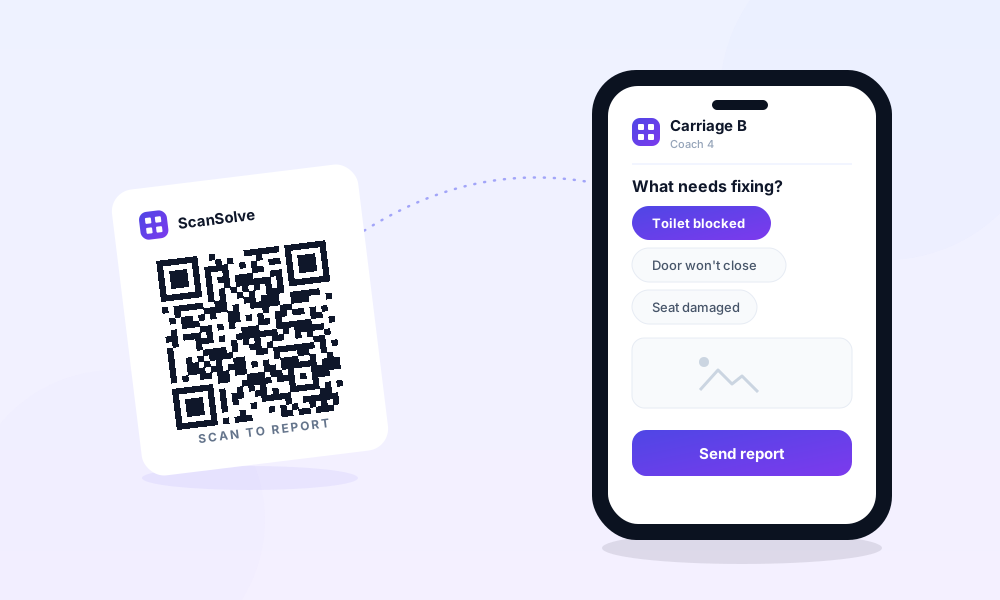
Put a QR code in each carriage, toilet, and station area. Staff, cleaners, or passengers scan and report in about 20 seconds — no app, no login. Every report carries the exact unit and the time.
Unlimited QR labels on Starter · No card required · Written for fleet and station facilities managers
The problem
Why faults on a moving fleet go unfixed
A toilet goes out of service somewhere on a six-car set. The cleaner knows, the guard knows, and by the time it reaches the depot nobody can say which unit or when. So it runs another day out of service.
Reports don't name the unit
"A toilet's out on the Brighton service" means little to a depot with a hundred vehicles. The fault gets found by whoever trips over it next.
Nothing survives the handover
Crews change, cleaners rotate, and a verbal report evaporates. The next shift inherits a fault nobody wrote down.
Passengers see it before you do
The people who notice most are the ones with no way to tell you, so the first you hear is a complaint or a post online.
The people who see the fault first can't tell you.
Cleaners, crew and passengers spot it in the carriage. Without a way to report in seconds, it reaches the depot late, or never.
How ScanSolve fits
A code in every carriage
Put a label in each carriage, toilet, and station zone. Anyone who spots a fault — a cleaner, the guard, a passenger — points a phone at the nearest code and submits. The report carries the exact vehicle and location, timestamped, so the depot knows what's waiting before the unit arrives.
What gets reported
What changes
What you get out of it
The exact unit, every time
Each code maps to one carriage or zone, so a report says which vehicle and where, not a rough guess.
Nothing lost at handover
A scanned report outlives the shift. The next crew and the depot see exactly what's open.
Passengers can tell you
Give the people who see the fault first a way to report it in seconds, with no app and no account.
No per-seat tax
MaintainX and UpKeep bill $16–20 per user, per month, so widening reporting across a fleet team costs more every time. ScanSolve is one flat price, and the crew, cleaners and passengers who scan a code never count as users.
See how our pricing comparesHow it works
Up and running in under 10 minutes
Step 1
Print your QR labels
Generate labels in the dashboard and print them on standard Avery sheets. Peel and stick.
Step 2
Place them where faults happen
One code per machine, room, or zone. If something can go wrong there, put a label on it.
Step 3
Faults get reported and fixed
Anyone scans, fills a quick form, and the right person gets notified. Track it through to done.
FAQ
Rail & transport: common questions
Do passengers need an app?
No. They point a phone camera at the code and fill a short form. No app, no account. Only your team logs in to manage reports.
Does it work on a moving train with patchy signal?
The reporter needs a connection to submit, so codes work best where there's mobile coverage or onboard Wi-Fi. Stations, depots and most urban routes are fine; on a rural stretch a report may have to wait for signal. There's no offline queue today.
Can we tag every carriage?
Yes. Labels and locations are unlimited on every plan, including the free one, so you can tag every vehicle and every station zone.
How is this cheaper than a CMMS like MaintainX or UpKeep?
Those bill per user per month — MaintainX from $16, UpKeep from $20 — so a large fleet team is a growing per-head bill. ScanSolve is one flat price for the team, and the crew, cleaners and passengers who scan a code aren't users.
Put a code where the fault is.
Start free with unlimited QR labels. No card, no deadline. Upgrade to Prime when you want your own branding and instant alerts.